
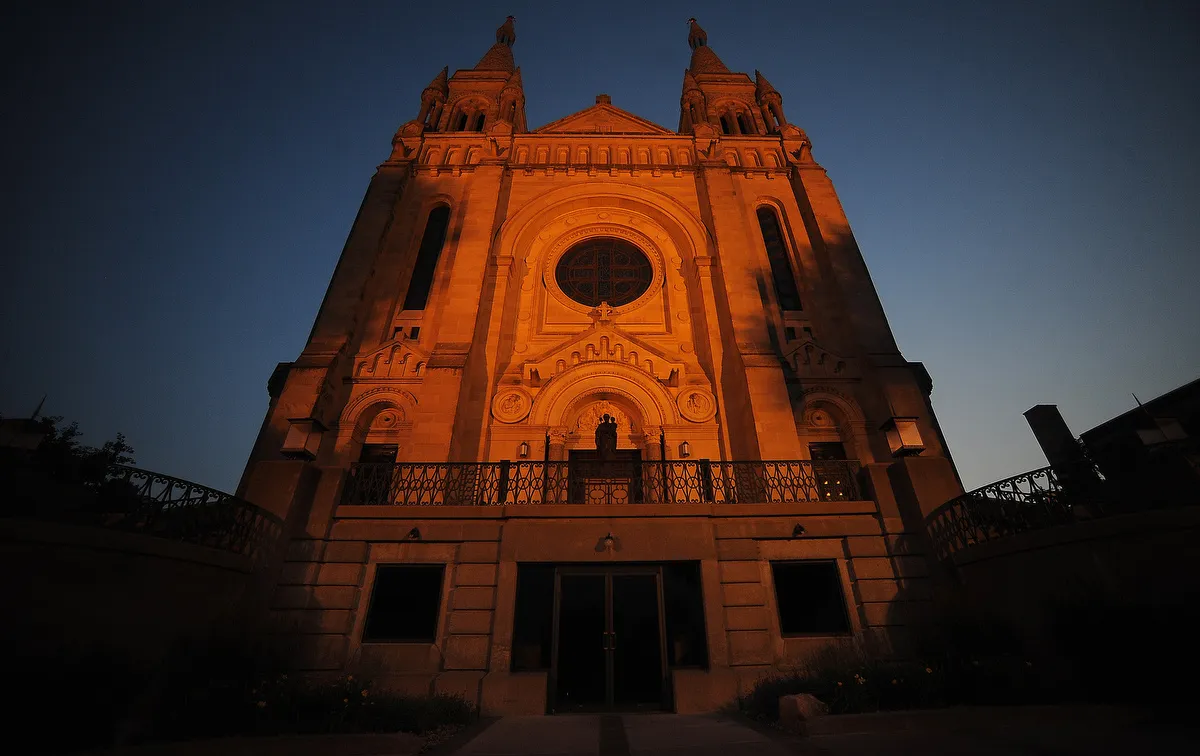
The first clue on cathedral historic district is often not the ceiling mark; it is the route water took between Cathedral Historic District and Sioux Falls, SD US station USW00014944. We trace seams, drains, scuppers, curb corners, old patches, roof traffic, and edge conditions before we price anything for owners and managers responsible for roof assets in Cathedral Historic District.
The first number for cathedral historic district is shaped by deck condition, insulation, access, drainage, edge metal, and whether the building can stay open while roof sections are exposed. Around I-29 and I-90 material delivery routes, that means we check the roof in sections instead of treating the entire building as one condition. For cathedral historic district, we identify active leak areas, older patches, soft insulation, curb corners, coping joints, scuppers, and roof traffic patterns before the scope is written.
NOAA NCEI 1991-2020 normals for the Sioux Falls, SD US station USW00014944 give cathedral historic district 27.85 inches of normal annual precipitation, a 47.3 F annual average temperature, 45.30 inches of normal annual snowfall, a January normal average of 17.9 F, a June normal precipitation value of 4.23 inches, and a July normal average of 74.4 F. Those numbers matter for cathedral historic district because rain, snow, ice, freeze-thaw, and summer heat stress different parts of the assembly. Drains and scuppers around McKennan Park need to move sudden rain during a cathedral historic district review. Seams and flashing around Dawley Farm Village need to handle winter movement for owners and managers responsible for roof assets in Cathedral Historic District. Edges near Louise Avenue Corridor need wind review before an overlay or coating is treated as low risk on cathedral historic district.
We document local roof conditions before pricing cathedral historic district. A roof walk for cathedral historic district includes membrane type, deck clues, insulation condition, slope, overflow paths, rooftop units, grease or chemical exposure, and safe staging points. If a test cut, moisture scan, drone view, or infrared inspection changes the decision on cathedral historic district, we explain the reason in the field report.
Sioux Falls building stock pushes cathedral historic district toward a practical plan. Downtown office roofs near district do not have the same shutdown tolerance as logistics roofs near Sioux Falls, SD US station USW00014944 when cathedral historic district is scheduled. Healthcare and school roofs need cleaner access control for cathedral historic district. Retail and restaurant roofs near McKennan Park need protection at entrances and service doors during cathedral historic district. Industrial and campus buildings need a hard look at parapets, coping, unit curbs, snow drift areas, and drain behavior after thaw before cathedral historic district is approved.
We keep the service discussion tied to what can be verified on the roof rather than forcing one membrane or one repair method into every building. For owners and managers responsible for roof assets in Cathedral Historic District, that distinction keeps the estimate honest. A small leak repair may protect a cathedral historic district roof area for a season if the surrounding roof is dry and stable. A recover may make sense for cathedral historic district when the existing assembly can support it. A coating belongs on a cathedral historic district roof that has been cleaned, repaired, tested, and prepared. A tear-off is the better path for cathedral historic district when moisture or deck damage would make cheaper options fail early.
We do not use manufacturer names as shortcuts for cathedral historic district. TPO, EPDM, PVC, KEE, modified bitumen, BUR, SPF, coatings, and metal all have valid uses in southeast South Dakota when cathedral historic district is scoped correctly. The deciding factors for cathedral historic district are slope, expansion movement, rooftop equipment, chemical exposure, service traffic, wind edge details, insulation value, hail exposure, and the owner's budget window.
Cost conversations for cathedral historic district are easier when the drivers are visible. Lift setup, safety lines, tear-off volume, wet insulation, deck replacement, tapered insulation, drain work, metal coping, temporary protection, after-hours labor, and occupied-building staging can move a cathedral historic district number quickly. We mark those cathedral historic district drivers in the scope so ownership can decide what is urgent, what can be budgeted, and what should be monitored.
The field report for cathedral historic district matters after the crew leaves. We record photo locations, roof areas, repair quantities, known exclusions, access notes, moisture observations, and open questions tied to cathedral historic district. On insurance-related storm work for cathedral historic district, we provide contractor-side documentation without acting as a public adjuster or promising a claim outcome. On planned work around McKennan Park, the same record helps accounting and facilities compare bids without losing the roof facts.
Schedule planning protects the building during cathedral historic district. Materials for cathedral historic district are staged away from drains, cut areas are sized for the weather window, open roof sections are dried and closed, and crews keep an exit path when storms build over the Big Sioux River corridor. With Louise Avenue Corridor, Baltic, and Lincoln County shaping I-29 and I-90 delivery routes, lift placement and material timing can matter as much as the selected membrane for cathedral historic district.
Safety for cathedral historic district starts before a crew unloads material. Roof access above Dawley Farm Village may involve ladders, lifts, public sidewalks, loading docks, rooftop units, skylights, fall hazards, and active tenants during cathedral historic district. We identify those cathedral historic district issues early so the project does not turn into daily improvisation. A well-planned cathedral historic district scope keeps water out, keeps people away from hazards, and keeps the building usable while work is finished.
If cathedral historic district is on the table, we prefer to see the roof before the budget hardens. A visit near district or I-29 and I-90 material delivery routes can confirm whether the problem is isolated, spreading through wet insulation, tied to drains, or linked to old edge metal.
For cathedral historic district, we also review previous repairs, roof age, owner-held warranty paperwork, interior leak locations, and roof access limits around Sioux Falls, SD US station USW00014944. That added context keeps a first visit for cathedral historic district from becoming a guess and gives the owner a record around Sioux Falls, SD US station USW00014944 that can be used for maintenance, budget planning, or bid comparison.