
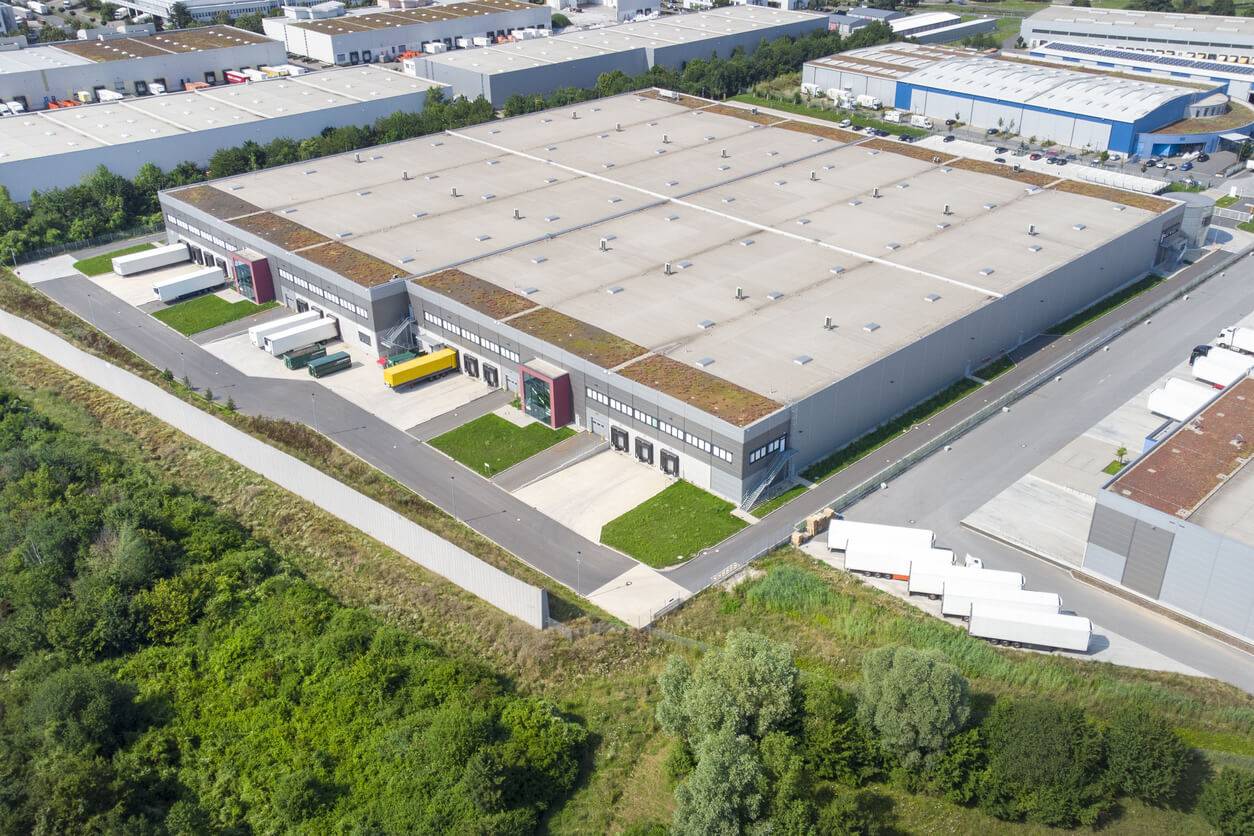
Industrial roofing in South Dakota, and Sioux Falls in particular, operates in one of the most demanding weather environments in North America. Extreme cold that regularly drops to −30°F, 40 inches of annual snowfall, severe thunderstorms capable of producing large hail and tornado-force winds, and the thermal cycling that comes from 100-degree swings between summer highs and winter lows: each of these forces acts independently to degrade roofing systems, and together they create a cumulative stress regime that separates adequate industrial roofing from genuinely durable industrial roofing faster than almost anywhere else in the country. Building owners and property managers in Sioux Falls, Rapid City, Aberdeen, and across South Dakota's I-29/I-90 industrial corridor need to understand what these conditions demand and how to meet them.
Sioux Falls sits at the intersection of I-29 running north-south through the eastern Dakotas and I-90 running east-west across the northern plains, a logistics geography that has made the city one of the most important freight crossroads in the upper Midwest. Amazon's fulfillment and distribution network has recognized this, establishing major distribution facilities in the Sioux Falls area that serve the upper Plains, northern Great Plains, and upper Midwest markets with speed that coastal facilities cannot match. These high-cube logistics buildings cover massive flat roof areas, and in South Dakota's climate, the roofing system must perform through −30°F winter cold snaps, spring freeze-thaw cycling, summer hail events, and fall wind events, all within a single 12-month period.
John Morrell and Smithfield Foods' meat processing facilities in the Sioux Falls area represent some of the most demanding industrial roofing environments in the region. Food processing plants operate at controlled temperatures that create extreme interior-to-exterior temperature differentials in winter, a plant maintaining 40°F processing temperatures while the exterior is −20°F is pushing 60°F differential across the roof assembly. This differential drives significant vapor pressure from the warm interior toward the cold exterior, and without a properly positioned and specified vapor retarder, condensation within the insulation layer is essentially guaranteed. Wet insulation in a meat processing plant environment creates not just thermal performance problems but biological contamination risks that can affect food safety compliance and trigger costly remediation.
South Dakota's wind energy industry, which makes the state a top-10 national producer of wind power, includes turbine manufacturing support facilities, operations and maintenance buildings, and substation structures spread across the state's wind-rich plains. Industrial roofing at wind energy facilities faces wind exposures that are typically Class 1 or Class 2 per FM Global classification, open terrain with no surrounding structures to moderate wind speeds. Roofing systems in these locations must be specified for higher-than-average wind-uplift resistance, and the fastener density and edge metal details that achieve required FM-rated uplift resistance in open-terrain conditions are significantly more robust than those required in developed urban areas.
Sioux Falls Regional Airport's industrial and cargo areas serve a regional economy that depends on air freight for time-sensitive agricultural products, medical devices, and industrial components. The airport industrial zone combines the standard aviation-facility roofing requirements, jet blast exposure, de-icing chemical resistance, FAA height compliance, with the extreme cold and snow load conditions that characterize South Dakota winters. Aircraft hangar doors of significant size create complex load conditions in adjacent roofing assemblies when they open and close in cold weather, and the thermal shock of cold exterior air entering a heated hangar interior is a stress mechanism that must be accounted for in the design of the roofing transition at hangar door thresholds.
South Dakota's extreme cold creates specific challenges for roofing material performance that don't apply in milder climates. Most roofing membranes become brittle and crack-susceptible at temperatures below −20°F, and in South Dakota those temperatures occur several times each winter. Specifying membranes with documented low-temperature flexibility ratings, typically tested at −25°F or lower per ASTM D1970 for modified bitumen and ASTM D4637 for TPO, is essential for buildings in this market. EPDM rubber remains flexible at very low temperatures and is a common choice for industrial re-roofing in the northern Plains for this reason, though its susceptibility to ponding water requires careful attention to drainage design. Two-ply SBS modified bitumen systems with fiberglass reinforcement are also well-suited to extreme cold when properly specified.
Hail is a major roofing hazard across South Dakota. The state sits within Tornado Alley's northern extension, and severe convective storms capable of producing golf-ball to baseball-sized hail strike the eastern part of the state every season. Hail damage to roofing membranes ranges from cosmetic surface cratering, which doesn't immediately cause leaks but accelerates UV degradation of the membrane surface, to full punctures that create immediate water infiltration. TPO and PVC membranes are more resistant to hail impact than EPDM at equivalent thickness because their thermoplastic composition is harder and more impact-resistant than EPDM's elastomeric composition. For buildings with documented history of hail impact, specifying thicker membranes (60 mil or 80 mil rather than 45 mil) and hail-guard protection layers significantly extends the interval between storm-related repairs.
Tornado risk in South Dakota is real and must be factored into the design of rooftop equipment and mechanical systems on industrial buildings. While a tornado track directly striking a building is a low-probability event, the wind speeds associated with near-miss tornado events, straight-line winds exceeding 100 mph associated with supercell thunderstorms, occur at frequencies that make FM-rated wind-uplift specifications a practical necessity rather than a theoretical exercise. FM Global's wind zone mapping places most of eastern South Dakota in a zone that requires minimum Class 1-90 or higher assembly ratings, and specifying accordingly provides meaningful protection against the wind events that this part of the country reliably experiences every spring and summer.
The seasonal nature of South Dakota's construction calendar compresses the ideal roofing installation window into roughly five months: May through September. Cold weather limits adhesive application, slows installation productivity, and increases the risk of membrane damage during handling. Winter re-roofing, which is sometimes unavoidable for facilities with active leaks or structural concerns, requires cold-weather adhesives, heated material storage, and experienced crews who understand how to maintain quality standards when temperatures drop. Emergency winter roofing in South Dakota is costly, labor-intensive, and carries higher failure risk than work performed in warm weather, which is the strongest possible argument for addressing deferred maintenance during the summer construction season rather than waiting until an active leak forces the issue in January.
Industrial building owners across South Dakota who want to maximize roofing asset value should invest in three things: a manufacturer-certified installation by a contractor who understands Plains climate roofing requirements, a proactive maintenance program that includes spring (post-freeze season) and fall (pre-winter) inspections, and an FM-rated assembly with wind-uplift resistance appropriate for their specific site exposure. The cost difference between a properly specified South Dakota industrial roofing system and a system specified to only minimum code requirements is modest on a per-square-foot basis. The difference in performance over a 20-year roof life, measured in avoided emergency repairs, reduced insurance claims, and extended intervals between replacements, is substantial and well-documented in this market.
Questions Owners Ask
What roofing membranes perform best in South Dakota's extreme cold and temperature swings?
EPDM rubber and two-ply SBS modified bitumen systems with fiberglass mat reinforcement are the top performers for extreme cold in South Dakota. EPDM maintains flexibility at temperatures well below −25°F and doesn't exhibit the stiffening and brittleness that some TPO and PVC formulations show in extreme cold. SBS modified bitumen's rubberized asphalt composition also retains flexibility at low temperatures and provides excellent resistance to both cold-weather cracking and summer UV degradation. If TPO is specified, which is common for its energy efficiency benefits, selecting a formulation with documented cold-temperature flexibility testing at −25°F or lower, and specifying a 60-mil or 80-mil thickness to provide additional impact resistance against South Dakota's frequent hail events, is strongly recommended.
How do I protect my South Dakota industrial building from hail damage to the roof?
The most effective hail protection strategy combines a heavier-mil membrane (60 mil minimum, 80 mil preferred for high-hail-risk locations), a granule-surfaced modified bitumen cap sheet over the membrane for added impact resistance, and regular post-storm inspections after significant hail events. FM Global and UL provide hail resistance ratings for specific roofing assembly combinations, and specifying an FM-rated hail-resistant assembly provides documented performance data rather than relying on thickness alone. Some industrial building owners in South Dakota also elect to install hail guards over rooftop mechanical equipment, skylights and HVAC units are particularly vulnerable to hail damage that is more expensive to repair than membrane damage. After any storm producing hail larger than one inch, a professional inspection should be performed within 60 days to document damage and initiate insurance claims before the coverage claim window closes.
How does the extreme temperature range in South Dakota affect roof insulation requirements?
South Dakota's climate, with summer highs above 100°F and winter lows below −30°F, creates a 130°F seasonal temperature range that drives more thermal movement in building structures and roof assemblies than almost any other US climate. Higher insulation R-values reduce the thermal gradient across the roof assembly, which moderates the temperature swings that the structural deck and membrane experience and extends service life by reducing fatigue from repeated expansion and contraction cycles. Current energy codes for commercial and industrial buildings in South Dakota typically require minimum R-25 to R-30 for low-slope roofing, but the thermal and service-life benefits of R-35 to R-40 assemblies are often worth the additional insulation cost, particularly on heated manufacturing and processing facilities where interior-to-exterior differentials are extreme in winter.
Are there special considerations for roofing food processing facilities like the ones in Sioux Falls?
Yes. Food processing facilities present several roofing challenges unique to that occupancy type. First, the interior environment, cold processing temperatures, high humidity from wash-down operations, and chemical exposure from food-grade cleaning agents, creates vapor pressure conditions that require carefully specified vapor retarders positioned on the warm side of the insulation. Second, building codes and USDA/FDA inspection requirements mean that roofing materials must be non-reactive and non-contaminating, materials that could shed particles into the food processing environment below are not acceptable. Third, any roofing work performed while the facility is in operation requires coordination with the food safety program manager to ensure that work debris, adhesive fumes, and membrane materials don't create food safety compliance risks. Most food processing plant operators require their roofing contractors to submit a pre-work safety and contamination prevention plan before beginning any on-site work.
What is the typical cost to reroof a large distribution or logistics building in Sioux Falls?
Re-roofing a large distribution or logistics building in Sioux Falls typically ranges from $7 to $16 per square foot installed, depending on system type, existing roof condition, insulation R-value, and project complexity. A basic EPDM recover on a dry, structurally sound existing assembly falls at the lower end; a full tear-off with new R-30 tapered insulation, 60-mil TPO, and FM 90 wind-uplift rated assembly falls in the middle; and projects requiring asbestos abatement, structural deck repair, or specialized drainage reconfiguration approach the upper end. South Dakota's compressed construction season means that contractors have a limited window to complete warm-weather installations, which can create scheduling premiums during peak season. Engaging a contractor in late winter or early spring for a summer installation, rather than waiting until the season is underway, typically yields more competitive pricing and better crew availability.