
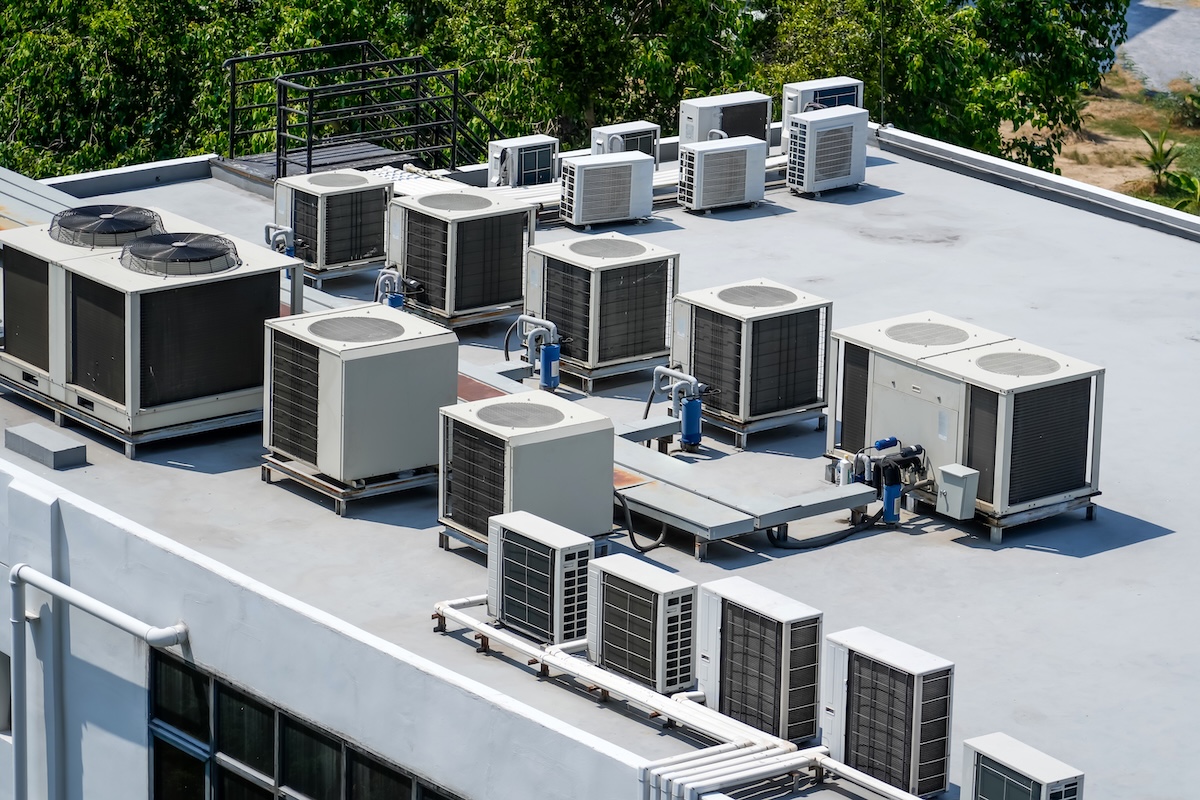
The Sanford Health corporate headquarters complex in downtown Sioux Falls, one of the largest nonprofit health systems in the nation, with its administrative and executive offices occupying multiple Class A buildings in the downtown core, represents the kind of high-profile occupied office building re-roofing project that defines professional commercial roofing in this market. Sioux Falls's office market is defined by healthcare, financial services, and the credit card industry that has made the city a national back-office hub. These tenants have professional expectations about building maintenance and zero tolerance for water intrusion into spaces that house sensitive records, financial systems, and healthcare data.
Sioux Falls's climate poses a unique challenge for occupied office building roofing: winter freeze-thaw cycling is severe enough to crack improperly detailed flashings within two to three years, but the work windows that allow quality membrane installation are concentrated in a relatively short May through October season. A re-roofing project that misses the good-weather window and starts in November faces adhesive performance limitations, membrane flexibility challenges in sub-zero temperatures, and the real risk of being trapped mid-project by an early lake-effect-like event from the northeast. We plan Sioux Falls office projects to begin no later than May and to have all membrane installation complete by September, with flashing and sealant work allowed through October.
EPDM is the standard specification for Sioux Falls office building re-roofing, chosen for its freeze-thaw flexibility and its four-decade service record in South Dakota's climate. Fully adhered EPDM with water-based bonding adhesive applied at the proper temperature, above 40°F for most water-based products, is the dominant installation method on office buildings because it provides superior wind uplift resistance without the mechanical fastener heads that can telegraph through a membrane on a visible rooftop. TPO is viable for new construction on buildings where the cool-roof SRI value contributes to energy efficiency goals, but experienced Sioux Falls contractors approach TPO on occupied retrofit projects with caution given the cold-temperature installation constraints.
Occupied building protocols in Sioux Falls's professional office market focus on preventing water intrusion to sensitive interior spaces. Sanford Health's administrative buildings house medical records systems and executive offices where even a ceiling stain from a brief water intrusion becomes an insurance and data protection issue. We never leave an open or unprotected area on a Sioux Falls office roof overnight, regardless of forecast conditions. South Dakota's weather changes fast, a clear October afternoon can turn into a snow squall by evening, and we maintain a rain emergency team that can be mobilized within two hours to install temporary covers on any unprotected area if the forecast changes during the workday.
South Dakota energy code compliance is governed by the state's adoption of IECC 2018, which requires continuous insulation R-values for low-slope commercial roofs in Climate Zone 6, where Sioux Falls is classified, of R-25 to R-30. Office buildings in Sioux Falls have a stronger insulation payback case than almost any other building type because they are heated from November through March in a climate with regular sub-zero temperatures and cooled from June through August in a climate that sees 100°F days. Roof insulation reduces both heating and cooling loads, and the combined annual savings from a code-compliant insulation upgrade on a mid-sized Sioux Falls office building typically run $8,000 to $15,000 per year.
HVAC coordination on a Sioux Falls office building must account for the fact that the heating system is as critical as the cooling system. A rooftop gas package unit that is disconnected for relocation in November needs to be back in service the same day, you cannot leave a Sioux Falls office building without heating capacity overnight when temperatures are in the teens. We stage rooftop unit relocation sequences in close coordination with the building's mechanical contractor and confirm that backup heating capacity is available before any unit is taken offline. For buildings with rooftop gas units, we also ensure that flue gas clearances from the new membrane are maintained after the membrane height changes from an insulation upgrade.
Green roof and amenity deck features are uncommon in Sioux Falls's office market compared to coastal tech markets, but rooftop decks on Class A buildings in the downtown core are gaining traction as developers compete for premium tenants. The challenge in Sioux Falls's climate is that a rooftop terrace must withstand both the freeze-thaw cycling that destroys improperly detailed drainage and waterproofing systems and the snow loads that require proper structural support. We use freeze-thaw resistant drainage layers and frost-depth design principles for all rooftop terrace projects in the Sioux Falls market, including pedestal-mounted paver systems that allow water to drain freely without trapping it under the pavers where it freezes and heaves.
Lease considerations in Sioux Falls's office market reflect the dominant tenant types. Credit card companies and financial services firms, particularly those in the Midco and Wells Fargo Bank corporate offices and the large back-office campuses on the east side of the city, have detailed facilities management standards that include roof maintenance requirements. National banking regulations, including OCC guidance on third-party risk management, have pushed some of these firms to require formal roofing maintenance programs as part of their facilities vendor documentation. We provide compliance-ready maintenance program documentation for financial services tenants who need to demonstrate that their building's envelope maintenance meets regulatory standards.
Hail damage to office building roofing in Sioux Falls is an insurance event that happens more frequently than most property managers expect. The Sioux Falls area records hail events with stones of one inch or more two to three times per year. On a flat office roof, hail damage to the membrane and to rooftop HVAC equipment covers is the typical result. We recommend specifying 80-mil TPO or reinforced EPDM on new Sioux Falls office projects to provide the best available hail resistance, and we document hail damage observations as a separate category in all post-storm inspection reports to support insurance claims that distinguish hail damage from wear and tear.
- When is the best time to re-roof a Sioux Falls office building?
- The optimal window is May through September, with membrane installation complete by the end of September. October work is manageable for flashing and sealant if temperatures stay above freezing, but November through April work carries significant risks from cold-temperature installation limitations and unpredictable weather. Start the planning process in January or February to allow procurement and scheduling to position the project for a spring start.
- How do you keep a Sioux Falls office building weathertight during winter re-roofing?
- The primary rule is never leaving open membrane work unprotected overnight. We maintain a rain and snow emergency response team that can cover any open area within two hours. For projects that extend into October, we reduce the size of the daily work area so that temporary cover requirements are manageable. No adhesive application is performed when temperatures are below the manufacturer's minimum, typically 40°F for water-based products.
- Does South Dakota's energy code require insulation upgrades on office re-roofs?
- Yes. IECC 2018, as adopted in South Dakota, requires R-25 to R-30 continuous insulation for low-slope commercial roofs in Climate Zone 6. Re-roofing projects that disturb the existing insulation must upgrade to current minimums. The payback on insulation upgrades in Sioux Falls's heating-and-cooling climate is strong, typically four to six years, which makes the upgrade financially compelling beyond just code compliance.
- What hail resistance rating should I specify for a Sioux Falls office roof?
- FM 4473 Class 4 hail resistance, which corresponds to impact resistance from two-inch hailstones, is the recommended specification for Sioux Falls office buildings given the area's hail frequency. Specify the membrane thickness and attachment system that achieves this rating, and request the specific test report from the manufacturer for the product being proposed. Insurance premiums for buildings with documented Class 4 hail-resistant roofing may be lower than for standard specifications.
- How do financial services tenants affect office building roofing requirements in Sioux Falls?
- Financial services tenants with national banking affiliations may require formal roofing maintenance program documentation as part of their facilities vendor compliance standards. This typically means a written maintenance agreement with defined inspection frequencies, documented inspection reports, and a response-time commitment for reported leaks. We provide compliance-ready documentation packages for financial services-occupied properties that satisfy these vendor management requirements.