
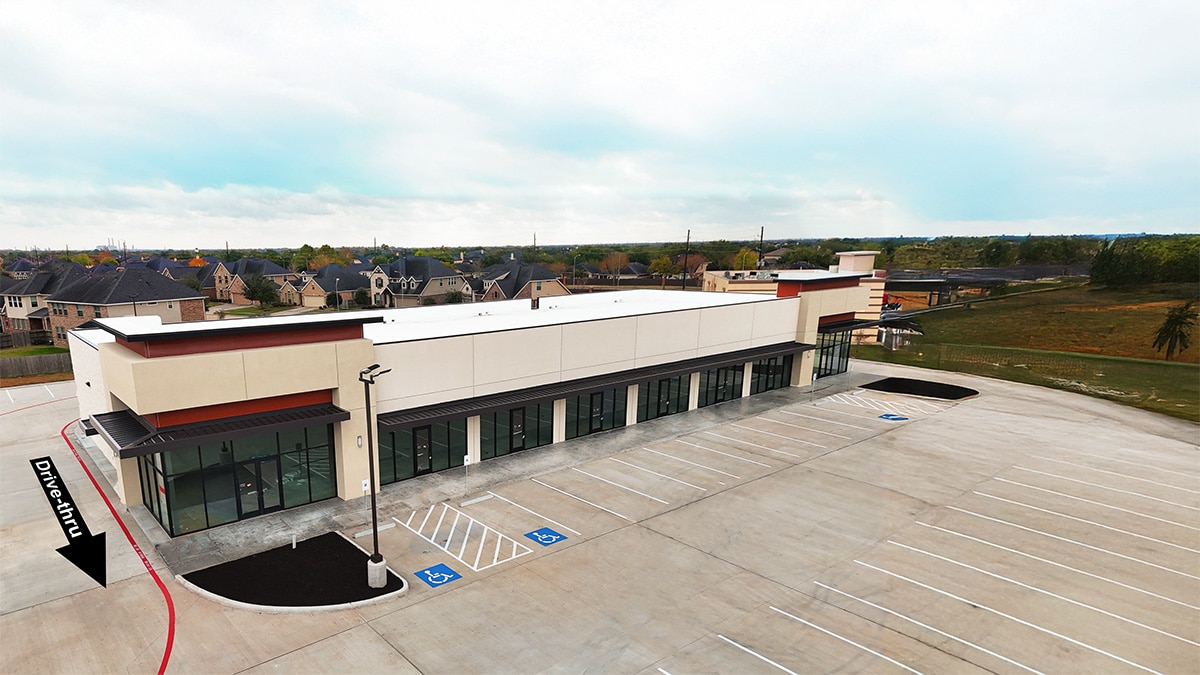
Sioux Falls has grown into the retail hub of a vast regional trade area spanning eastern South Dakota, southwestern Minnesota, and northwestern Iowa, with major shopping destinations concentrated along the 41st Street corridor, the Empire Mall complex, and the expanding development along 57th Street and Louise Avenue. Property owners managing retail assets in this market serve a customer base that drives significant distances specifically to access the retail concentration that Sioux Falls offers, which means that any roofing failure that closes a store or disrupts the shopping experience has an outsized impact on tenant revenue relative to markets where customers have more nearby alternatives. Commercial roofing here is not just building maintenance, it is part of the regional retail infrastructure that the entire trade area depends on.
South Dakota's continental climate puts Sioux Falls retail roofs through some of the most extreme thermal cycling of any commercial roofing market in the country. Summer temperatures regularly reach the mid-90s Fahrenheit, while January lows can drop below minus 20 degrees, a swing of more than 110 degrees that every roofing membrane, fastener, and flashing assembly must accommodate without failure over a service life of 20 years or more. TPO roofing systems have demonstrated strong performance in this climate because the thermoplastic formulation retains flexibility at low temperatures, preventing the cracking and seam separation that plague modified bitumen cap sheets during deep cold snaps. Sixty-mil TPO with mechanically attached installation and reinforced seam welds is the standard commercial specification throughout the Sioux Falls retail market.
The Empire Mall and the surrounding retail district on 41st Street represent a concentration of anchor tenant roofing complexity, large continuous roof fields supporting dozens of HVAC units, exhaust fans, and communications equipment penetrations that must remain watertight through repeated freeze-thaw cycles over the service life of the system. For big-box retailers in the Sioux Falls market, rooftop HVAC units are typically larger and more numerous than in milder climates because the equipment must handle both intense summer cooling loads and extended heating demands during South Dakota winters. The increased equipment density translates to more penetrations per square foot of roof area, each requiring a correctly installed curb, base flashing, and counter-flashing assembly that will remain watertight through 40-plus freeze-thaw cycles annually.
Snow load management is a commercial roofing consideration in Sioux Falls that has no equivalent in southern retail markets. South Dakota's building code requires commercial roof structures to be designed for the local ground snow load, but roof drift accumulation against parapets and around rooftop equipment can create localized loads that significantly exceed the design baseline. Retail property owners with long, low-slope buildings that have parapets or mechanical screens should have their structural engineer confirm that the roof system can accommodate drift scenarios, and should ensure that their maintenance program includes snow removal when accumulation approaches design limits. Membrane damage from snow removal equipment is a real risk that can be mitigated by installing snow guards and specifying equipment access procedures that restrict certain removal methods near sensitive flashing zones.
The Louise Avenue development corridor south of the core 41st Street retail concentration has attracted significant new strip center and power center construction over the past decade, and these newer buildings generally feature better insulation and more sophisticated drainage design than the older retail stock closer to downtown. However, Sioux Falls winters create a specific challenge for any flat-roof retail building regardless of construction vintage: ice dam formation at roof edges and drainage points when interior heat loss creates melt cycles that refreeze at the building perimeter. Proper insulation thickness, vapor retarder placement, and heat trace on primary drains prevent the ice dam conditions that can force water under membrane edges and damage interior wall assemblies without ever producing an obvious active leak during the winter period when the damage is occurring.
Retail tenant disruption planning for Sioux Falls roofing projects must account for the regional nature of the customer base, a construction project that makes a national retailer's entrance inaccessible or damages the parking lot experience for one weekend can result in customers making the longer drive to Omaha or Minneapolis rather than rerouting to another Sioux Falls location. Experienced commercial roofers in this market develop detailed sequencing plans that complete visible work on customer-facing facades during midweek periods, reserve parking lot disruption for low-traffic Tuesday and Wednesday windows, and guarantee that every storefront is fully accessible before weekend shopping hours begin. These operational commitments are as important as the technical roofing specifications for protecting tenant relationships during the project.
CAM budget management is a particular focus for Sioux Falls retail landlords who serve tenants operating on thin retail margins in a market where competition from e-commerce has squeezed discretionary retail sales. Annual roof inspection programs and targeted preventive maintenance on the Empire Mall corridor and the 41st Street strip centers allow property managers to address small seam separations and deteriorating flashings for a few hundred dollars each before they become full membrane failures requiring emergency repairs that cost ten times as much and create the kind of visible water damage that triggers tenant rent abatement demands. The business case for preventive roofing maintenance is particularly compelling in a market where tenant retention is the primary driver of property value.
The commercial roofing material supply chain for the Sioux Falls market is more constrained than in coastal metros, with fewer local distributors and longer lead times for specialty products. Retail property owners planning re-roofing projects should work with contractors to confirm material availability and lead times before finalizing project schedules, particularly for projects planned around shoulder-season windows in April-May or September-October when roofing contractors across the Midwest simultaneously compete for available TPO membrane and insulation board inventory. Projects that require custom-dimensioned prefabricated components, such as pipe penetration boots in non-standard sizes, should order materials well before the planned project start date to avoid delays that push work into winter conditions where cold-applied products underperform and safety risks for crews increase.
Insurance and financing considerations for Sioux Falls retail properties increasingly require documented roof condition assessments as part of standard due diligence processes. The combination of South Dakota's hail frequency, winter loading events, and high wind exposure means that commercial property insurers have specific requirements around roof age, maintenance documentation, and repair history for retail buildings in this market. Property owners who can present a documented maintenance record, current manufacturer warranty, and third-party condition assessment generally access better insurance terms and demonstrate asset quality to lenders and prospective buyers that translates into real financial value at disposition or refinancing.
- How does the extreme temperature range in Sioux Falls affect commercial roofing material selection?
- Sioux Falls's swing from summer highs above 95 degrees to winter lows below minus 20 degrees Fahrenheit requires roofing membranes that maintain flexibility at extreme cold temperatures while resisting UV degradation during long, sunny summer periods. TPO is the preferred choice because its thermoplastic formulation stays pliable in very cold conditions, preventing cracking at seam welds and terminations during freeze events, while its white surface reflects summer solar energy rather than absorbing it. Modified bitumen and EPDM systems are present on older Sioux Falls retail buildings but frequently exhibit cold-weather brittleness at the extreme low temperatures the market regularly experiences.
- What snow load precautions should Sioux Falls retail property owners take for flat roofs?
- Retail property owners in Sioux Falls should confirm that their roof structure's design snow load meets or exceeds the South Dakota State Building Code ground snow load requirement for the area, and that the structural engineer's assessment considered drift accumulation against parapets and around rooftop equipment that can multiply the design load in localized areas. When significant snowfall is forecast, particularly for buildings where interior heat loss is limited by good insulation and the snow therefore does not melt off naturally, property managers should arrange snow removal before accumulation reaches a meaningful fraction of the design capacity. Membrane protection pads should be installed in areas where shoveling equipment will contact the roof surface to prevent punctures and cuts to the TPO or PVC field membrane.
- Are there specific hail damage concerns for retail roofing in the Sioux Falls area?
- Eastern South Dakota experiences significant hail frequency, and the Sioux Falls retail market has seen repeated large-hail events that damage roofing membranes, HVAC equipment, and rooftop skylights on commercial retail buildings. Sixty-mil TPO provides better impact resistance than thinner membranes, and some property owners in hail-prone corridors specify 80-mil membrane on sections of the roof near equipment access paths where impact resistance is most critical. Following any hailstorm that produces stones larger than one inch, retail property owners should arrange professional roof inspections to document the damage condition for insurance claims before additional weather events complicate the attribution of impact damage to a specific storm event.
- What is the best time of year to schedule a commercial re-roofing project in Sioux Falls?
- The optimal re-roofing window for Sioux Falls retail properties is late April through October, when temperatures are consistently above 40 degrees Fahrenheit and precipitation is more predictable than the variable spring and fall shoulder seasons. Late spring and early fall projects benefit from lower contractor demand than the peak summer window and avoid the scheduling pressure that pushes crews to work in marginal conditions. Projects should never be scheduled to extend into November without confirmed contractor commitment to complete all work before the first hard freeze, as cold-weather roofing requires heated material storage, modified application procedures, and increased quality control attention that drives up both cost and risk.
- How should Sioux Falls retail property owners address ice dam formation on older buildings?
- Ice dam prevention on Sioux Falls retail buildings requires addressing the heat loss conditions that cause snow to melt at the roof field and refreeze at the colder roof perimeter, which means upgrading insulation at roof edges and parapet areas to eliminate the thermal bridging that drives the differential melt pattern. Heat trace cables installed in primary drains and along drainage valleys prevent ice formation at the critical points where blocked drainage creates the most damage risk. Where immediate insulation upgrades are not feasible, installing self-adhering membrane underlayment (ice-and-water shield) at the roof perimeter provides a secondary waterproofing layer that limits damage even when ice dams do form, buying time for the permanent thermal solution to be addressed during the next re-roofing cycle.