
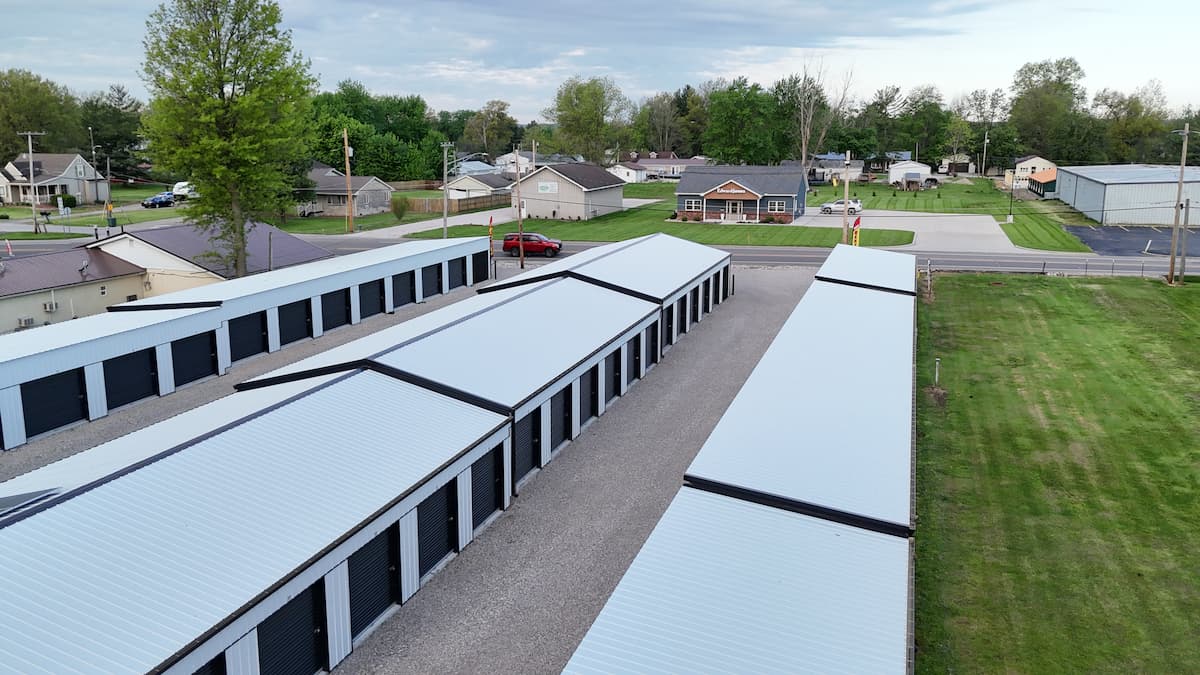
Stor-N-Lock Self Storage operates a large, well-maintained facility on West 41st Street in Sioux Falls, South Dakota, serving one of the fastest-growing mid-size cities in the northern Great Plains. The roofing challenges at a Sioux Falls self-storage campus are among the most demanding in the country: a climate that combines severe freeze-thaw cycling, heavy hail events, significant snow loads, and temperature swings of more than 100°F between summer peaks and winter lows subjects roof membranes to stresses that eliminate most shortcuts from the specification.
Freeze-thaw cycling is the primary long-term threat to self-storage roofs in Sioux Falls. The city experiences dozens of freeze-thaw cycles annually, as temperatures cross the 32°F threshold repeatedly from October through April. Any moisture that has infiltrated membrane seams, insulation layers, or concrete parapet caps will expand when it freezes, progressively widening the breach with each cycle. Over three to five years, a hairline seam deficiency that would simply be a minor stain in a warmer climate can develop into a full seam separation. Specifying fully adhered membrane installations rather than mechanically attached systems, and using cold-temperature-rated adhesives and sealants during fall and spring installations, significantly reduces this risk.
Hail is a serious and recurring threat in Sioux Falls. South Dakota sits at the eastern edge of hail alley, and the city experiences multiple significant hail events most years, with some storms producing golf-ball-sized or larger hailstones. A hail event that dents metal panels or cracks brittle modified bitumen surfaces can create dozens of membrane breaches simultaneously, and the damage may not produce immediate interior leaks but will allow moisture infiltration that saturates insulation over the following months. Installing FM 4473-rated, hail-resistant TPO or impact-resistant modified bitumen provides meaningful protection against the frequency of hail exposure Sioux Falls experiences.
Snow load design is a code requirement for Sioux Falls that differs dramatically from most southern and western markets. South Dakota building codes require roofs to be engineered for ground snow loads that translate to significant roof dead-load capacity, and self-storage buildings with wide-span structural members must be verified by an engineer of record for the intended roof system weight. Adding insulation during a re-roofing project increases the dead load on the structure, and if the original building was designed to minimal standards, a structural review before specification is prudent.
Ice dam formation at eaves and scuppers is a winter-specific challenge on Sioux Falls storage buildings. When interior heat loss through the roof causes the membrane surface to warm above freezing while ambient temperatures remain below zero, melting snow at the roof field refreezes at the colder eave overhang, building a wall of ice that can force liquid water back under the membrane edge. Proper above-deck insulation, keeping the roof surface cold enough to prevent this differential, combined with heated scupper and gutter systems on vulnerable buildings addresses this risk at its source.
TPO membranes rated for cold-climate application perform well in Sioux Falls when correctly specified. Standard TPO formulations can become brittle at temperatures below -20°F, which are not uncommon during Sioux Falls winters. Cold-climate TPO formulations from major manufacturers maintain flexibility at temperatures down to -40°F and should be explicitly specified for any Sioux Falls project to avoid installation cracking during winter service calls and to prevent membrane brittleness at seams during thermal contraction events.
The selection of insulation for Sioux Falls self-storage roofs involves a trade-off between thermal performance and moisture management. Polyisocyanurate insulation offers the highest R-value per inch but loses effective R-value in sustained cold temperatures below approximately 20°F. Many Sioux Falls contractors specify a hybrid insulation assembly, polyiso over the structural deck covered by a layer of EPS or XPS board, that maintains thermal performance at low temperatures while providing adequate above-deck R-values for energy code compliance.
Re-roofing a Sioux Falls storage campus should be scheduled for May through September to avoid the freeze-thaw complications of fall and spring and the access limitations of winter. Summer hail risk in Sioux Falls is real, and contractors should have a documented emergency response plan for mid-project storm events that includes temporary waterproofing materials staged on site. A partial roof tear-off exposed to a June hail event can generate damage and insurance claims that significantly exceed the cost of an on-site weather preparedness protocol.
Long-term maintenance for Sioux Falls self-storage roofs should include pre-winter inspections in September or October that specifically check seam integrity, parapet cap condition, and drain heater function. Post-hail inspections after any storm producing hailstones above one inch in diameter should be treated as mandatory, with photographs documenting roof condition before any cleanup or temporary repair. This documentation is essential for insurance claims and for distinguishing new storm damage from pre-existing conditions on subsequent inspections.
- How often does Sioux Falls experience significant hail events that damage roofs?
- Sioux Falls typically experiences multiple hail events per year that can damage roofing materials, with one or more events producing hailstones of one inch or larger in most years. Hail-resistant membrane ratings should be considered a baseline specification, not an upgrade.
- What is the correct snow load design standard for Sioux Falls storage buildings?
- South Dakota follows the International Building Code with the state's published ground snow loads. For Sioux Falls, the ground snow load is typically 25 to 30 pounds per square foot, which the structural engineer of record converts to a design roof snow load accounting for roof geometry and exposure.
- Can standard TPO be used in Sioux Falls, or is a cold-climate formulation required?
- Cold-climate TPO formulations are strongly recommended for Sioux Falls. Standard formulations can become brittle at temperatures regularly experienced in South Dakota winters, increasing the risk of cracking during thermal contraction or routine maintenance access in cold weather.
- What causes ice dams on storage buildings in Sioux Falls, and how are they prevented?
- Ice dams form when interior heat loss warms the roof field enough to melt snow while the eave overhang remains below freezing. They are best prevented by increasing above-deck insulation to reduce heat loss, supplemented by heated scupper and gutter systems on vulnerable eave conditions.
- Is a structural review required before adding insulation during a re-roofing project in Sioux Falls?
- While not always required by permit, it is prudent practice. Adding insulation to an existing roof increases dead load, and older storage buildings designed to minimum structural standards should be reviewed by a licensed structural engineer before significant additional weight is applied.