
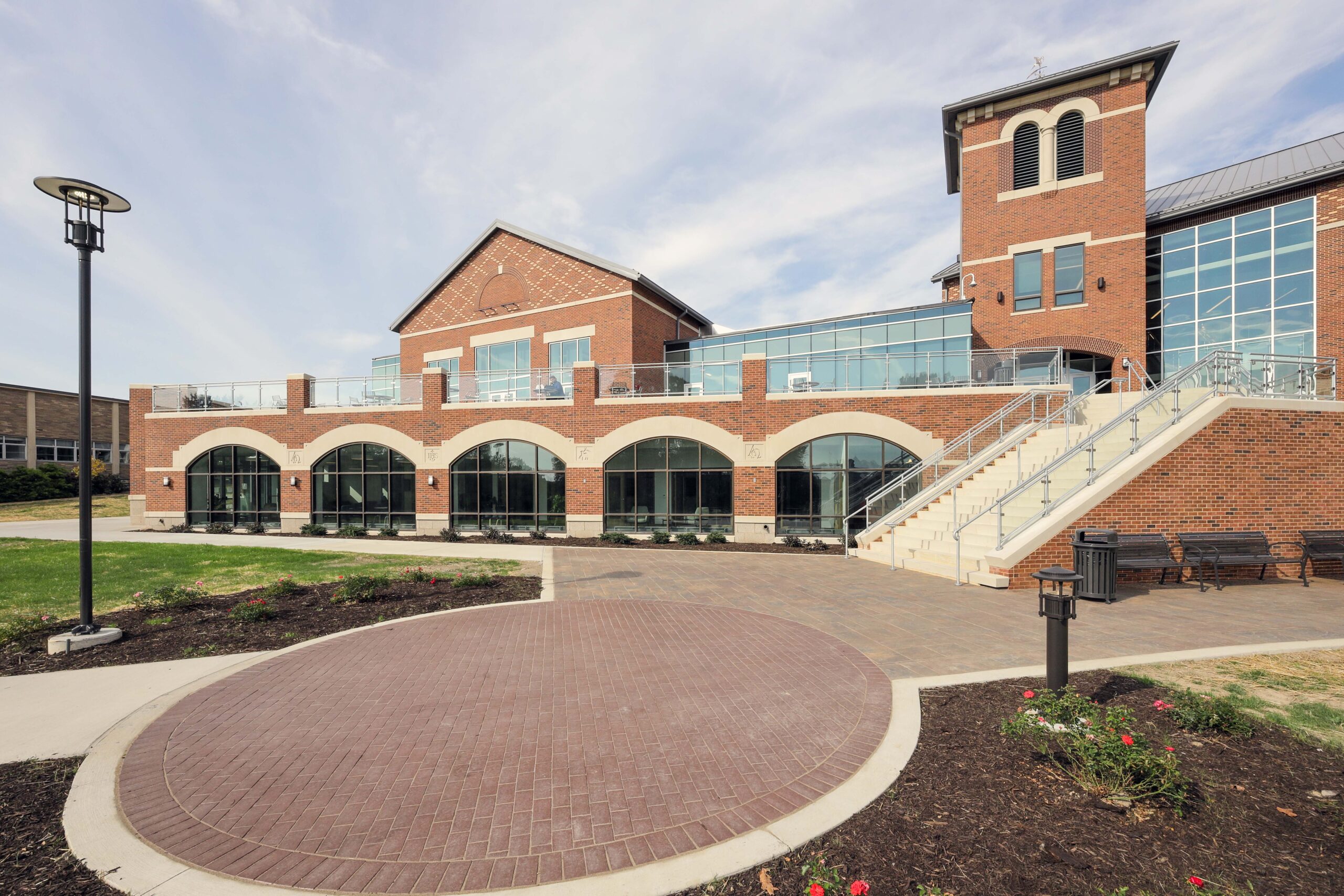
The University of South Dakota in Vermillion and South Dakota State University in Brookings, the state's flagship research university and its land-grant institution, represent the primary university roofing clients in a state where higher education facilities are geographically distributed across a wide landscape with extreme climate conditions. In Sioux Falls itself, the University of Sioux Falls and Augustana University maintain smaller private-institution campuses, with Augustana's established liberal arts campus featuring older buildings that require historically sensitive maintenance approaches. The university roofing market in Sioux Falls is defined by private liberal arts campus character, constrained capital budgets, and the extraordinary thermal demands that South Dakota's climate places on every building envelope component.
Augustana University's compact campus in Sioux Falls includes buildings from the early twentieth century alongside modern athletic and academic facilities added in the past twenty years. The older buildings, primarily brick masonry construction with original built-up roofing systems from mid-century renovation cycles, present the characteristic challenges of aging institutional buildings: multiple membrane layers of unknown moisture content, deteriorated wood blocking at parapets, and drainage systems that have been patched rather than properly corrected over decades of deferred maintenance. Our pre-bid assessment process uses core sampling and infrared thermography to characterize these systems before recommending repair, recover, or full replacement.
Semester scheduling in Sioux Falls requires completion of major roofing work between May graduation and late August return, a window that coincides with South Dakota's most workable weather but also its busiest construction season, when contractor availability is most constrained. We begin scheduling conversations with Augustana and University of Sioux Falls facilities teams in January to secure summer mobilization windows before the market becomes fully committed. Early scheduling lock-in is especially important for major re-roofing projects that require multiple crews and extended timelines.
South Dakota's climate is among the most demanding for roofing in the United States. The Sioux Falls area experiences temperature ranges from minus-thirty Fahrenheit in severe winter events to over one hundred degrees in summer, ice storms, late-season blizzards through April, and occasional summer hailstorms that cause immediate membrane impact damage. We specify membrane systems with certified cold-temperature flexibility to negative-thirty degrees and hail-impact resistance ratings appropriate for the Sioux Falls hail frequency, balancing material cost against the performance lifetime that extreme climate conditions determine.
Historic buildings on Augustana's campus, including Mikkelson Library, Old Main, and the original Leadership Teams Hall, carry institutional significance that exceeds their formal historic designation status. The Augustana community expects roofing decisions on these buildings to preserve their visual character and architectural integrity, not simply achieve weatherproofing performance. We use materials that match original masonry colors and profiles at parapets, source copper flashings for landmark buildings, and present all significant material choices to the campus architect before finalization.
LEED documentation requirements for South Dakota university projects are typically governed by institution-specific sustainability policies rather than state mandate. Augustana has adopted sustainable operations goals that include waste reduction and energy efficiency in capital projects. We provide standard LEED-compatible documentation for all projects regardless of formal certification intent, giving facilities teams the option to pursue certification without retroactive data collection if the institution's priorities evolve.
Campus programs at Augustana include a nursing and health sciences program whose clinical simulation facilities require consistent interior humidity and temperature control. Roofing assemblies above these spaces must maintain thermal and moisture performance within tolerances that exceed standard academic building requirements. We specify vapor retarder designs appropriate for Sioux Falls's heating-dominated climate profile and verify insulation continuity in all clinical simulation building re-roofing projects before closing the assembly.
Wind is a pervasive roofing design factor in Sioux Falls and across South Dakota's open landscape. The plains exposure means that wind pressures at roof perimeters and corners are substantially higher than in sheltered urban environments, and the frequency of sustained high-wind events exceeds most other U.S. markets. We design fastening patterns using the calculated wind pressures for Sioux Falls's specific terrain category rather than defaults, and we require pull-testing of fastener resistance in aging substrates before finalizing fastening designs on older buildings.
Budget management is more acute in the private liberal arts university context than at flagship public institutions with larger capital programs. Augustana and University of Sioux Falls facilities teams must justify every capital expenditure to boards and donor communities who have visibility into the budget that public university administrators typically do not face. We provide detailed cost analysis options, repair, recover, and replacement with lifecycle cost projections, that give facilities directors the analytical tools to make and communicate capital decisions to non-technical governance audiences.
- What temperature rating should roofing membranes meet in Sioux Falls?
- Membranes should be rated for cold-temperature flexibility to at least negative-thirty Fahrenheit, with heat-welded seams throughout; hail-impact resistance ratings appropriate for the Sioux Falls hail frequency should also be specified, as impact damage is a documented cause of early membrane failure in this market.
- How is the summer construction window secured in Sioux Falls's busy construction season?
- Scheduling conversations should begin in January to lock in summer mobilization windows before the market is fully committed; the combination of limited contractor availability and the short academic summer break makes early planning essential for major projects.
- What wind design considerations apply to Augustana's campus buildings?
- Sioux Falls's open plains exposure produces wind pressures at roof perimeters substantially higher than sheltered urban markets; fastening patterns should be designed to calculated local wind pressures, not defaults, and pull-testing of aging substrates is required before finalizing fastening designs.
- How are historic campus buildings evaluated for repair vs. replacement?
- Core sampling and infrared thermography characterize existing assembly conditions, moisture extent, and structural deck status; the data supports cost-benefit analysis comparing repair, recover, and replacement options with lifecycle cost projections presentable to non-technical governance audiences.
- What vapor retarder design approach is used for Sioux Falls university buildings?
- Sioux Falls's heating-dominated climate places the dew point outside the roof assembly when vapor retarder is properly positioned on the warm side of the insulation; this calculation is performed for each building type and use based on its specific interior humidity and temperature profile.